
Hey! Manchester promotes gigs by folk, Americana and experimental bands from around the world in Manchester, England. Read more here, see below for our latest shows, check out our previous shows, contact us, or join our mailing list, above.
When: 7.30pm on Monday 15 April 2024
Where: Gullivers, 109 Oldham Street, Manchester, M4 1LW
PLEASE NOTE: This show has sold out! Watch this space for details of future The Burning Hell shows in Manchester.
We’re delighted to welcome The Burning Hell’s Ariel Sharratt & Mathias Kom back to Manchester – to present Never Work!
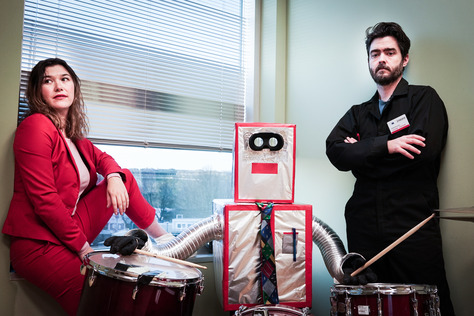
Working hard or hardly working? The last few years have been a bit of both. In the spring of 2020 Ariel Sharratt & Mathias Kom released an album of contemporary labour songs and were just getting ready to head out on the road with it when… well, you probably remember what happened next. By the time touring had started up again, their attention was geared toward the 2022 album Garbage Island with their band The Burning Hell.
Finally, this April, Ariel and Mathias will be bringing Never Work to life, collaborating with visual artist and indie rock legend Shotgun Jimmie in a multidisciplinary show. This tour will be accompanied by a re-pressing of the long sold out Never Work, and the release of a collaborative EP with Shotgun Jimmie, Hardly Working.
Attend on: Facebook
All shows are 18+ unless otherwise stated.
When: 7.30pm on Wednesday 24 April 2024
Where: YES Pink Room, 38 Charles Street, Manchester, M1 7DB
We’re excited to welcome Giant Sand to Manchester – their first visit in 19 years!
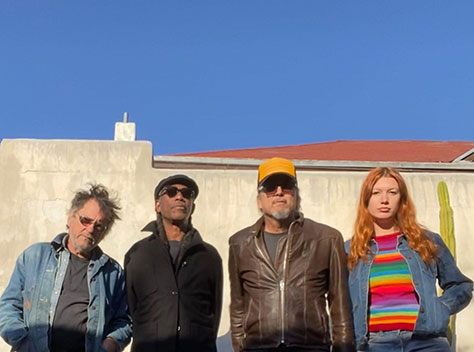
Giant Sand celebrate 25 years since the release of the legendary Chore Of Enchantment, the panoramic masterpiece that was the turning point for the classic line-up featuring seasoned songwriter Howe Gelb and latter-day Calexico members Joey Burns and John Convertino from 1999.
Filled with mind-bending one-liners, customary offbeat instrumentation, echo fields and hazy horizons, Chore Of Enchantment is a songbook of Howe Gelb’s greatest songs. The high level production by the legendary Jim Dickinson, PJ Harvey foil John Parish and acclaimed singer/songwriter/producer Kevin Salem, a tour-de-force of Gelb’s unique oeuvre.
Highlighting their eclectic and esoteric career, this reissue celebrates the band’s magnificent, long and winding career. This deluxe reissue features restored artwork and newly penned liner notes from MOJO’s Dave Henderson.
‘A beautiful, emotionally complex album’ – The Quietus
Giant Sand have been the primary outlet for the stylistic curveballs and sun-damaged songcraft of singer-songwriter Howe Gelb. In four-plus decades he’s managed to reinvent rock, country, blues, punk, garage, lo-fi, jazz, gospel, avant-garde noise and flamenco gypsy music with his impressionistic imagery and expansive observations of the world.
The reissue is released alongside 2010’s Blurry Blue Mountain. A gorgeous and much-celebrated collection of perfectly-crafted, personal songwriting from Howe Gelb. It’s another well-thumbed chapter recounted by one of Americana’s great writers.
‘An album full of heart, soul, and wit… there’s some very real magic to be found in the elegant force of Blurry Blue Mountain’ – AllMusic
Giant Sand will be touring the UK as a band, including Tommy Larkins on drums, this April.
Special guest is Ben Woods from The Golden Dregs. The Golden Dregs are a band based in South East London. Their latest album, On Grace & Dignity, was released in February 2023 on 4AD, followed by an EP of pop covers in November. Originally hailing from Cornwall, the project started life in 2016 as a musical vehicle for producer and songwriter Ben Woods.
Attend on: Facebook
All shows are 18+ unless otherwise stated.
When: 7.30pm on Thursday 25 April 2024
Where: YES Basement, 38 Charles Street, Manchester, M1 7DB
We’re delighted to be working with Melanie Baker for the first time!
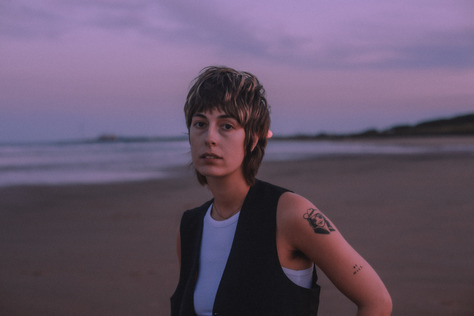
Melanie Baker is a singer, songwriter and musician hailing from the Lake District and now based in Newcastle-upon-tyne. Her direct and honest lyricism captures themes such as queer identity, self-reflection and the anxieties of modern life.
Her self-released music has so far received radio support from BBC 6 Music, BBC Radio 2, BBC Radio 1, BBC Introducing and Radio X, as well as supporting the likes of dodie, Tessa Violet, Maisie Peters, Will Varley, Jen Cloher, Jesca Hoop and runnner.
Baker’s latest EP Burnout Baby is set to be released in April 2024 on Du Blonde’s indie record label Daemon TV, followed by her second headline UK tour in April with her newly formed band.
She wrote the songs on this EP about the process of struggling with intense burnout: the texts from friends waiting endlessly for a reply, the days lost to endless scrolling, the dying plants that just remind you that you’re not succeeding at taking care of anything. Amid real, raw pathos, there’s also a sense of lightness to Baker’s newly rocky full-band arrangements. These are songs that may never have existed had Baker not found a way to make music that excited her again, and that gives them tangible spark.
Burnout Baby is a kind of rebirth for Baker, a flame re-ignited which for a time had been lost. ‘It’s an evolution of me trying to stop caring what people think of me,’ she says. ‘All of these songs are just reminders to do what I want and be who I wanna be. They’re all almost mantras to me now. When I perform them, it’s like getting to hear the words that I really wanna believe in.’
‘Beautiful sound’ – Jo Whiley, BBC Radio 2
‘Alluring, irreverent scuzzy, grungry grit’ – Atwood Magazine
Main support comes from Jamie Henry – purveyor of sad songs.
And opening the show is KITTY, whose debut single Fine is out now.
Attend on: Facebook
All shows are 18+ unless otherwise stated.
When: 7pm on Saturday 27 April 2024
Where: Low Four Studio, Deansgate Mews, Great Northern, Manchester M3 4EN
PLEASE NOTE: This show now takes place at Low Four Studio on Deansgate Mews. All existing tickets remain valid, and doors now open at 7pm.
We’re delighted to be working with Australian composer and pianist Sophie Hutchings for the first time – plus special guest Simeon Walker!
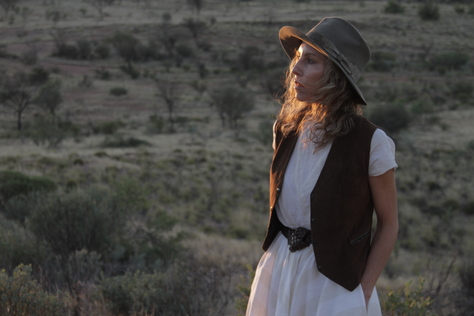
Close your eyes, and take a trip. Listen and you’ll see it. An ancient place of desert plains, mountain ranges and rocky gorges; of blazing sun, star-cloaked nights and shadows that loom and leave. A timeless terrain where clouds dance in water and red dirt roads stretch beyond the horizon.
This is soundscape as landscape. As a vast interior.
A World Outside.
The ninth studio album from lauded pianist and composer Sophie Hutchings is a work of spacious, hypnotic beauty, a musical travelogue inspired by a road trip through Australia’s mighty Northern Territory, beginning in tropical Darwin and going deep into the arid Red Heart.
Rich with emotion and feeling, texture and contrast, as propulsive and powerful as it is elegant and intimate, A World Outside is an impressionistic take on a wide brown land. Piano notes flow, pause and surge, variously blending with strings, synths, percussion and field recordings, and features from First Nations artists, revered Yolgnu songman Rrawun Maymuru and rising Larrakia diva, Lena Kellie.
This is music that unveils itself. Like a universe of secrets.
“I’m a person who needs time away in a natural environment in order to make music,” says Hutchings. “The bigger and more challenging the space, the better.”
Like the majority of Australians, Hutchings grew up – and spent holidays – on the coast. Sydney-based, she remains an avid surfer. Travelling is a passion: periods spent in India, Southeast Asia and the Middle East have woven golden threads into a sound hailed as ‘calm in a maddening world’ by Clash and ‘stirring, vigorous, grandly melodic’ by MOJO.
Hutchings flexed this shining aesthetic to global acclaim on her 2020 Mercury KX debut Scattered on the Wind, a collection of hitherto unheard pieces – some based around verse by the 13th century Persian poet Rumi – and fresh material created with musicians on strings, woodwind and soprano vocals.
This time around, she began with a blank canvas. With a map and an open mind. Reflection had provided direction: “Over lockdown I realised that I really didn’t know enough about the land on which I was living” she says. “I decided to get lost in its colossal landscape. I wanted to absorb what I was seeing.”
Hutchings committed everything to memory: the constant heat haze. The contours etched by the sunrise. Palm trees jutting from the sides of cliffs, swimming holes strafed with rainbow sparkles, rocks whose patterns told of long-gone seas. The great silence, sometimes eerie, often serene, that crept into her bones.
“There were days when I literally didn’t see any humans. But I saw dingoes. Cliff wallabies. Wild camels and wild horses. I heard echoes, and melodies in the wind. Some mornings I’d do a big hike up a rock face and stand there taking in these endless 360-degree views.”
A smile. “That land has a mystical other worldliness like nothing I’ve ever experienced before.”
Back home in Sydney, Hutchings began magicking an album using the loose, natural style she developed as a child. A child who, having struggled to sight-read, would come to channel her distinctive musical gifts using instinct, imagination and a system of written-out chord charts, practicing in private on the family piano while her two older brothers were listening to and/or playing in alt-rock bands. Her jazz-musician father, a multi-instrumentalist, had raised her on a musical diet that generally favoured horn players: John Coltrane, Miles Davis, Chet Baker. The young Sophie gravitated to instrumental piano, regardless.
Pieces by the likes of Frédéric Chopin and proto-minimalist Eric Satie are in her muscle memory, nestled alongside such late-teen discoveries as contemporary classical composers Arvo Pärt and Jóhann Jóhannsson American chamber music renegades Rachel’s and iconic Australian improvising trio The Necks. And although Hutchings composed prolifically throughout her mid-to-late twenties she waited until she was 32 before releasing her debut album, 2010’s Becalmed.
“Music wasn’t something I’d ever thought of as a full time career,” says Hutchings, who has toured the globe, composed for film soundtracks and appeared on countless Best Of lists. “I guess music found me.”
Special guest is Simeon Walker. Leeds-based pianist and composer Simeon Walker has quickly emerged as a leading light in the burgeoning Modern Classical scene, following the release of Mono and Winnow, his two albums to date. Simeon regularly performs and tours across the UK and Europe; has supported a variety of artists including S. Carey, LYR, Sebastian Plano, Loscil, Erland Cooper and Taz Modi; and performed notable live sets at Latitude & Timber Festivals. His latest single Reverie features on the first official Piano Day compilation by the LEITER label, alongside Nils Frahm, Olafur Arnalds and Chilly Gonzales.
His music receives regular broadcasts on BBC Radio 3 shows including Unclassified and Night Tracks, alongside BBC 6Music, KEXP and Soho Radio, with his music receiving listening figures in excess of 25 million streams across platforms. He also founded and continues to curate Brudenell Piano Sessions; an intimate and varied live music series highlighting the diverse music being composed and performed on the piano, hosted at Leeds’ iconic Brudenell Social Club.
This show takes place at Low Four – a recording studio situated on Deansgate Mews in the Great Northern warehouse. This intimate venue features a Cloudwater bar.
Age restriction: 14+. Under 16s must be accompanied by an adult.
Attend on: Facebook
All shows are 18+ unless otherwise stated.
When: 7.30pm on Saturday 27 April 2024
Where: Hallé at St Michael’s, 36-38 George Leigh Street, Ancoats, Manchester M4 5DG
PLEASE NOTE: Due to exceptional demand this show has been upgraded to St Michael’s in Ancoats. All existing tickets remain valid, and doors now open at 7.30pm.
We’re excited to be working with Jerron Paxton again!
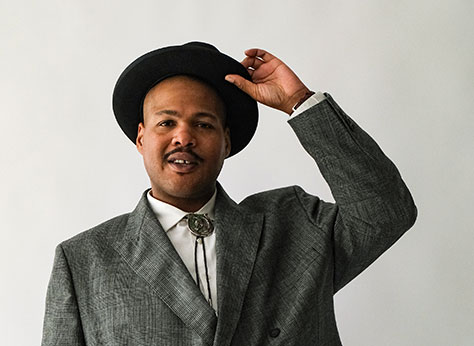
Smithsonian Folkways is proud to announce that Jerron Paxton has signed with the label for his next, long-awaited full-length release, due out in 2024. Paxton joins Folkways contemporaries such as Dom Flemons, Jake Blount, Our Native Daughters and others exploring the diverse roots of Black folk music in America and highlighting its continued importance and influence.
Paxton is a skilled interpreter of Black traditional music, having spent his life learning the multifaceted musical dialects of blues, old-time, ragtime, and Cajun music and playfully dressing them up in their brightest hues. He is an accomplished multi-instrumentalist, playing guitar, banjo, piano, fiddle and other instruments with deep histories and ties to Black American music — each with a master’s touch.
Born in South Central Los Angeles into a family steeped in Southern music and culture, he has been based in New York City for nearly his entire adult life. He has appeared on the covers of The Village Voice and Living Blues and has earned praise from numerous other publications. The Bluegrass Situation captures Paxton’s holistic approach to his craft: ‘He is not merely a preservationist mining bygone decades for esoteric material or works that fit a certain aesthetic or brand. He simply takes music that is significant to his identity, his culture, and his experience and showcases it for a broader audience.’
Local support comes from Rik Warren.
Rik Warren – Lost at Sea
Singing from a mountain home
Ever seeking hearth – Beneath the forests
Between the Skies
This will be one of the first public concerts in St Michael’s since its recent re-opening, having been closed since 2004. The Roman Catholic church was founded in 1859 and became the heart of the Little Italy Community in Ancoats.
This is a 14+ show. Under 16s must be accompanied by an adult.
Attend on: Facebook
All shows are 18+ unless otherwise stated.
When: 7.30pm on Thursday 2 May 2024
Where: The White Hotel, Dickinson Street, Salford M3 7LW
We’re excited to be working with Ghostly Kisses for the first time – plus special guest Sandrayati!
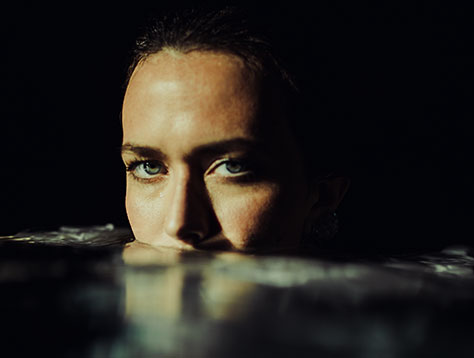
Music has always been around Margaux Sauvé, born in Quebec to a family of musicians; she picked up the violin at the tender age of five. Moving on to the Conservatoire in Quebec, she quit due to “missing the fun part of it” but still loved music so started to play violin in local bands. Singing came a bit later as she thought that “to be a singer you had to have a powerful voice and be loud”, something that doesn’t come naturally to her as a quiet, thoughtful person. Alongside this, the pop music on the radio whilst growing up in Quebec wasn’t connecting with her, so it wasn’t until she started to write music whilst studying psychology at University that the creativity and desire to express revealed itself: “it just opened a completely new path for me”.
Writing music as Ghostly Kisses arrived at a moment where Margaux was in “a living situation I was not able to get out of. A toxic relationship where I had a hard time understanding what was happening.” With this knowledge, it is understandable that most of her early music has a sorrowful but exploratory mood; knowing there were things she needed to express, but not understanding quite how instinctively she was writing until years later it became apparent what she was singing about.
And now, with ‘Heaven, Wait’, her mesmeric debut album ready for release, her songwriting has developed to the point that this is the first time she has written and felt like she was part of the conversation. Able to view herself with an external eye, the album reflects transitions and rebirth – still talking about difficult situations, but with the ability to cast someone else in the lead role, giving the music a deeply personal yet starkly universal appeal. One which Margaux feels has come from “a more mature, adult way of looking at it.”
Identifying key themes of the album, Margaux frames the album artwork within the context of the songs as being “from water towards the air, there’s a lot of dark around me and I’m just going through to the light.” And that feels like the crux of the album, that nothing is perfect – there are always difficult situations, but it is about trusting the process and working hard towards something positive.
All the songs on ‘Heaven, Wait’ talk at some point about a transition or a relationship she had to work on, not wanting to be stuck in a situation forever. Whilst the story of the album is an intensely personal journey, it’s the first time we find Margaux writing about excitement and desire. We also hear her develop as an artist with liberating songs that can be danced to amongst the darker, more melodramatic songs she has built her name on.
If title track ‘Heaven, Wait’ encapsulates the positive side of growth, then other songs, such as first single ‘Don’t Know Why’ is about how “at some point I had to let go and accept defeat, it was my own choice to leave and it was painful.” ‘Blackbirds’ is about depression; something she experienced first hand when she was eighteen going into an intensely dark place: “there was no grey area, there was only black or an idea of being free.”
‘Heaven, Wait’ was recorded largely at home with her partner (in music and in life) Louis-Étienne Santais, working separately in the same house they would bounce ideas between rooms before coming together to rehearse the songs once they have developed into a solid enough form. Once they had the songs in a place, they were happy with, they worked on the files in real time with producer Tim Bran, despite him being on the other side of the Atlantic in the UK, and with Thomas Bartlett in New York City on other songs.
Together they have created an album that nods to her contemporaries like Billie Eilish and Aurora, blending pop songs in sophisticated production; but Ghostly Kisses can be traced further back to Royksopp’s ‘Running To The Sea’ and London Grammar – Margaux first learned to sing by trying to imitate Hannah Reid, a gateway to discovering her own way of singing.
All in all, ‘Heaven, Wait’ represents a new, more complete Margaux Sauvé, and as she moves from the dark to the light, we have been offered a compelling snapshot of grief, growth and desire.
Tour support comes from Sandrayati. Born to a Filipino mother and American father, and raised on the islands of Java and Bali, Sandrayati can’t recall a time when she didn’t want to sing. She grew up in a musical household, in a culture that adores live music. Her parents, both of whom work with protecting the land rights of indigenous peoples, share a love of folk music and protest songs. ‘In our community we were seen as the Von Trapp family,’ she recalls fondly. ‘None of us are classically trained, but my mother was always singing around the house; my dad plays guitar and writes songs.’
Sandrayati began writing original songs when the family relocated from Indonesia to the Philippines. It was a fraught time, in which she struggled to cope with the sudden upheaval. As a child, she remembers how she would tell people of her and her parents’ different heritages. ‘I would say, my mum’s Filipino, my dad’s American, and I’m Indonesian. And people would laugh at that.’
Similar themes of identity run swift and strong like river currents through her record. ‘There was a bird with her wings to the north,’ she sings on first single, New Dawn, the melody for which came from a dream. Her voice is diaphanous, light as a spider-web strand being plucked by the wind, floating above the song’s delicate composition. ‘It’s a story of migration, one that goes back to the beginning of humanity,’ she says. ‘How movement – uprooting and planting yourself somewhere else – is a part of life. There’s pain and beauty in it.’
Attend on: Facebook
All shows are 18+ unless otherwise stated.
When: 2pm until late on Sunday 5 May 2024
Where: In the cafe at Salford Museum and Art Gallery, Crescent, Salford M5 4WU
Hey! Manchester is delighted to be curating a stage at this year’s Sounds From The Other City – our 14th year in a row! SFTOC is a one-day music festival that celebrates the diversity of Greater Manchester’s ‘other city’.
The 12-hour event places many of the city’s favourite promoters – including Now Wave, Grey Lantern, Fat Out, Strange Days and The Beauty Witch – into several of our favourite venues and drinking establishments along Chapel Street.
Hey! Manchester is moving to a new venue in 2024: in the cafe at Salford Museum and Art Gallery! The epicentre of SFTOC shifts along Chapel Street this year to Salford University’s campus, and we’re excited to be right in the heart of it.
This year we’re also partnering with someone new: the Northern Poets Society! So you can expect our live music picks to be interspersed with their tailor-made spoken word selections.
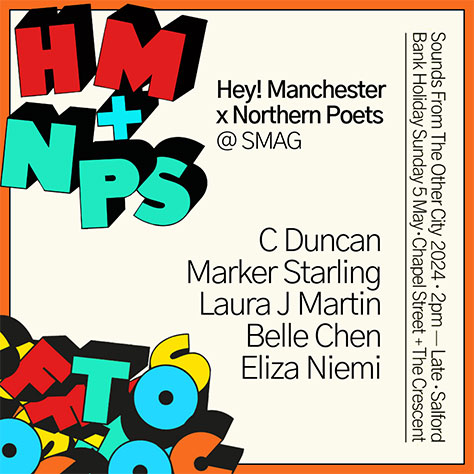
Our 2024 line-up features Mercury Prize nominee C Duncan, Australian Music Prize nominee Belle Chen, the BBC 6 Music-championed Laura J Martin and two Toronto-based artists in troubadour Marker Starling and multi-instrumentalist Eliza Niemi. Listen to all five artists on our Spotify playlist:
To check out who else is playing Sounds From The Other City, and to buy tickets (giving access to all stages), visit Soundsfromtheothercity.com.
Attend on: Facebook
All shows are 18+ unless otherwise stated.
When: 7.30pm on Tuesday 7 May 2024
Where: Gullivers, 109 Oldham Street, Manchester, M4 1LW
We’re delighted to welcome Francis of Delirium back to Manchester!
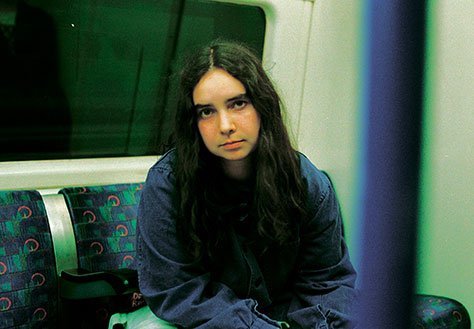
Francis of Delirium has announced her highly anticipated debut album Lighthouse, released on 22 March 2024 via Dalliance Recordings.
Francis of Delirium is the moniker of 22-year old, Luxembourg-based Jana Bahrich. The young artist’s incredible journey up until this point has seen her release three critically acclaimed EPs, All Change, Wading and The Funhouse. With praise so far from the likes of Stereogum, FADER, Pitchfork, The Line of Best Fit, 6 Music, Clash, KEXP and NPR to name but a few, Francis of Delirium is on the precipice of something extremely exciting with debut album Lighthouse.
As Francis of Delirium has progressed over three EPs and two previously released album tracks, Real Love and First Touch (both produced by Catherine Marks (boygenius, The Killers, Wolf Alice)), the sound of the project is shifting from angst filled alt-rock, to embrace a more vulnerable and open sonic palette, weaving in elements of pop alongside rock to create Gen-Z anthems which celebrate the beautiful things of the world. The upcoming album is titled Lighthouse, as their music has always straddled the line of light and darkness, both musically and lyrically. Expanding the instrumentation by incorporating more pianos and acoustic guitars, the tracks on Lighthouse are intimate and disarming.
Speaking on the upcoming album, Jana offers: ‘For this album, hope is the prevailing feeling I’m left with after making it and listening to it. The idea is that there is this light guiding you out into a space where you can be more open and accepting of love and joy. Even as you gain or lose love, it never really goes away; it just transforms itself, moving into other relationships with you.’
Alongside the Lighthouse album announcement, Francis of Delirium has shared a new track Blue Tuesday. A track fizzing with power-pop energy but inflected with shades of shoegaze melancholy. Speaking on the track, Jana says: ‘Blue Tuesday was a chance to go back a little bit to our original sound, heavy guitars, uptempo, in your face music. We are a band that really loves to play live, sweaty, messy and physical music, so it felt important to have this song be part of the album.’
The announcement of Lighthous’ comes following a busy year of touring with the likes of Soccer Mommy, Briston Maroney, Horsegirl, The Districts and hitting Eurosonic, Iceland Airwaves and Tree Fort Fest, as well as opening for The 1975 and Kings of Leon. In August, Francis of Delirium shared a video for album track Real Love, seeing her step into the role of co-director and co-producer roles for the video.
Local support comes from Dee Rae. Dee Rae is a four-piece indie-folk act from Manchester, taking influence from a blend of contemporary artists such as Big Thief and Snail Mail, and legendary songwriters Elliott Smith and Joni Mitchell.
Attend on: Facebook
All shows are 18+ unless otherwise stated.
When: 7.30pm on Wednesday 8 May 2024
Where: Gullivers, 109 Oldham Street, Manchester, M4 1LW
We’re delighted to be working with The Buffalo Skinners for the first time!
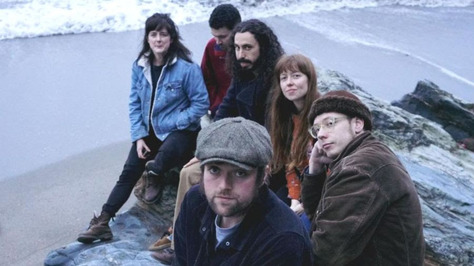
In their thirteenth year together as The Buffalo Skinners, 2024 marks an exciting new chapter for Peter (guitar and vocals) and James (violin and vocals). Fellow founding member Lawrence Menard is back in the fold on accordion, keys and electric guitar, and with new members Clare Quinn, David Haynes and Becca Philip on bass, drums and backing vocals respectively – the band now find themselves fully submerged in a lively electric sound that they’d only previously dipped their toes into on tracks like Monkey On Your Back. A successful spring 2023 tour announced the band’s return to live performances after a four-year hiatus.
The Buffalo Skinners’ adventures have taken them all over (USA, Ireland, France, Germany, Norway) and they’ve performed at some of the most renowned music festivals in the UK (Glastonbury, BBC Radio 2 Live in Hyde Park, Cambridge Folk Festival, Tramlines, Deer Shed). Their music has earned the attention, air-play and esteem of many high profile BBC radio DJs including Steve Lamacq, Bob Harris, Cerys Matthews, Janice Long, Paul Jones and Dermot O’Leary.
Their new album Picking Up What You’re Putting Down is out in March 2024.
‘Their music is painted vividly across a broad canvas, using a palette that draws easily from traditional folk and rock ’n’ roll’ – God Is In the TV
‘They just got the crowd going and had a roaring reception. Astonishing’ – Janice Long, BBC Radio 2
Main support comes from Pip Fluteman. ‘I first met Pip in a crazy apartment full of musicians in Berlin. He seemed good-humoured, well-travelled and poetic. He was hanging out in that apartment as much as I was, but we never crossed paths until then. We talked about Manchester United and The La’s, and sang some songs together we both knew from various indie bands from the UK. When he started singing, it was apparent he wasn’t just some old callous-shouldered session singer, the creativity in his performance style and dynamic control, with all the heart that the most significant songwriters out there are tapping into. I went home and listened to his music and have been a fan ever since. For me, the thing that makes him stand out is his attention to form. He always stays true to the hook, and his songs remain poetic and intriguing while staying within the frame of modern pop music.’ – Ashley Watson, The Ocelots
Opening the show is Henrio. Henrio is the artistic name of the Catalan singer-songwriter and producer Enric Verdaguer who, after living in Liverpool for the last four years crafting his art and having released an EP, Help me understand, in May 2022, took a bigger step with the release of his debut album Somewhere, Sometimes last January.
The album, written in English and Catalan, originates from the return to the country of origin. Through these ten folk-driven songs, the artist explores a wide range of emotions coming from the self-identification as a wanderer, a nomad, from the lacking sense of belonging drawing inspiration from Nick Drake, Big Thief, Father John Misty, Andy Shauf or Blake Mills.
Previously, in 2015, the singer-songwriter had released Moonstruck (Música Global, 2015) under his own name Enric Verdaguer, touring and playing on the main stages of Catalonia before taking a break and moving to the UK, where he graduated in Songwriting and Production at LIPA, the university founded by Paul McCartney in Liverpool.
Attend on: Facebook
All shows are 18+ unless otherwise stated.
When: 7.30pm on Friday 10 May 2024
Where: The Stoller Hall, Hunts Bank, Manchester M3 1DA
We’re delighted to welcome The Handsome Family back to the Stoller Hall!
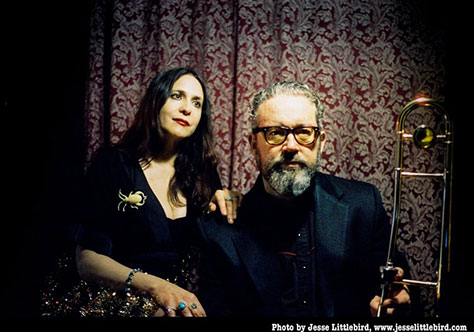
The Handsome Family’s new record Hollow began with a scream in the night. “It was a bleak winter during the middle of the pandemic,” says Brett Sparks. “One night around 4 a.m. Rennie started screaming in her sleep. She screamed, ‘Come into the circle Joseph! There’s no moon tonight.’ Scary as it was, I thought, man, that’s a good chorus!”
The Handsome Family (songwriting and marriage partners Brett and Rennie Sparks) have been defining the dark end of americana for over 30 years. Brett writes the music and Rennie writes the words. Their work has been covered by many artists including Jeff Tweedy, Andrew Bird and most-recently Phoebe Bridgers. Their song “Far From Any Road” was the opening theme for HBO’s True Detective season one and still receives thousands of Shazams every week from all over the world.
Handsome Family songs take place under overpasses and inside airports. Historical figures like George A. Custer and Nikola Tesla appear alongside a flying milkman and the whisper of an air conditioner against a plastic tree.
Their eleventh studio album, Hollow (out now) delves into the natural world at the edges of the man-made. It is a record lush with leaves and shadows and echoing with occult mystery.
It begins with the dream-inspired “Joseph”— full of Mott the Hoople swagger and electric guitar so overdriven it sounds like an organ run through a vacuum cleaner. Next is the haunting “Two Black Shoes” which filters a Portishead groove through the highway motels, homeless encampments and McMansions of post-pandemic America.
“I wanted to get an electronic feel with organic drums, “says Brett, “So I chopped up our drummer’s takes into little bits, quantized the beats, and ran those through an Echoplex. I really like that hybrid of real and fake.”
“The King of Everything,” brings Brett’s harpsichord background into the mix plus Rennie’s time on the back porch taking muscle-relaxants and watching the white-winged doves.
“Squirrels in the basement / Raccoons in the walls / Centipedes with stingers,” Brett sings on the mischievous and mysterious “Skunks.” The spooky Beethoven-inspired piano and Brett’s eerie whooping create a jingle for an increasingly desperate business. “Call us anytime at night,” Brett sings. “Call us day or night.”
“The Oldest Water” is the real story of a primordial sea found deep in a Canadian mine. Dave “Guts” Gutierrez’s trilling mandolin gives the song an old-timey parlor elegance and the rushing feel of flowing water.
“Mothballs” is a simple hymn for voice and piano. “A buddhist friend of Aleister Crowley’s always wore this old purple coat,” says Rennie, “and moths were continually flying from its pockets. The man refused to harm even the tiniest wool moth and I think that’s something we should all aspire to.”
The softly-strummed “Shady Lake” is based on a real fishing hole hidden in the cottonwoods outside of Albuquerque where soft waves lap the reedy shores as turtles dive from wet rocks into the murky glory.
“To The Oaks,” sings of the shady groves of ancient mystery cults while Alex McMahon’s overdriven guitars conjure up more modern tones. Brett sings, “Phantoms fly the forest / Twist up dripping ferns / Spirits in the shadows / In root and dirt and bone.”
The album closes with “Good Night,” a lullaby that at once soothes and threatens. Over a lazy honky tonk Brett sings, “Time for Santa to sharpen his claws / Time for skin walkers / Time for the saw…” This song has instantly become the band’s favorite live-show closer.
Asked to describe their music Brett says, “Western gothic.” It is music inspired by the abandoned strip malls of desert America where cracked pavement shimmers with heat and thorny weeds slowly reclaim the land.
Handsome Family songs may be dark, but there’s always laughter on stage. Rennie sings as well as plays banjo and bass. She often introduces songs with seemingly unrelated stories. Brett, with his deep baritone and stentorian presence, is the undeniable center of stage. The two are often joined by multi-instrumentalists Alex McMahon and Jason Toth as well as fans, new and old, some returning again and again to see them live over the decades.
“We’re astonished to be breathing,” Rennie says about the band’s longevity, “Let alone still be inspired to write songs and sing together. There’s been a lot of smashed coffee cups in our house over the years, but we’re still unable to resist the urge to make music.”
Tour support comes from Frontier Ruckus. For as much that can happen with the passing of years, sometimes more happens in an instant. Frontier Ruckus has dedicated themselves to cataloging the impact of imperceptible, everyday moments, crafting a singular artform of their own making with gorgeous orchestral folk pop arrangements and songwriter Matthew Milia’s complex lyrical observations on the mundane and the holy.
The years following the group’s fifth album – 2017’s anxiously opulent Enter the Kingdom – have been big years. Their decade-plus of ceaseless touring was forcibly ended by the same global rerouting that affected everyone at the dawn of 2020, but as that surreality played out, Milia was also walking a separate concurrent timeline where he truly found love, got married, and in due time became a father.
Sixth album On the Northline was laboured over as these bizarre and beautiful days played out, carefully built to act as a centrifuge for the scattered emotional states and flashes of joy, doubt, and gratitude that inspired it. The songs map the changes that come gradually but inevitably with age, but also illuminate how entire existences can shift with a glint of sun off of the windshield, or in the time it takes to notice a stranger walk into the room.
Attend on: Facebook
All shows are 18+ unless otherwise stated.